
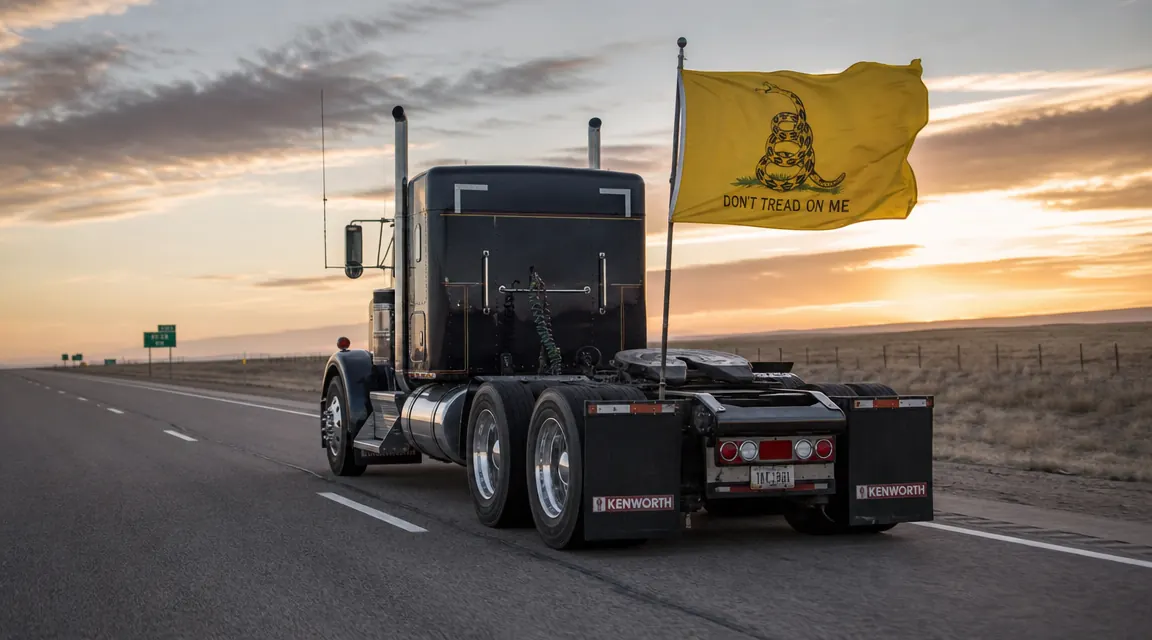
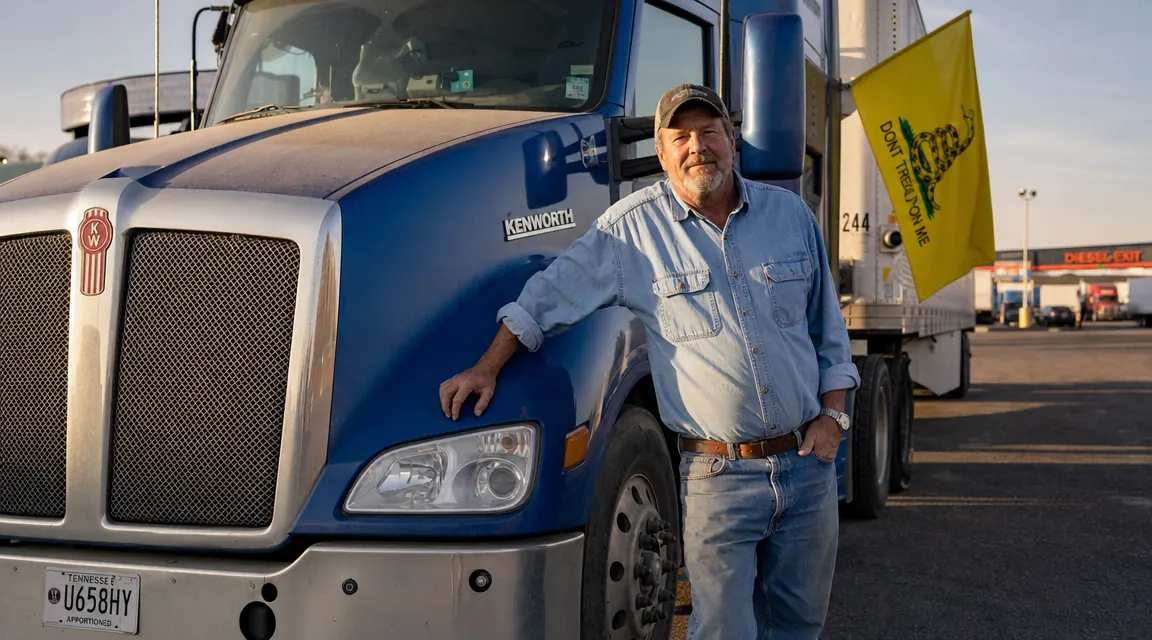
I bought my first Anley Don't Tread on Me flag in the spring of 2024. Had just picked up a load in Jacksonville heading to Denver, and I wanted something flying off the back of my Kenworth T680 that said what I was thinking without me having to say a word. I've been carrying the Gadsden since my Marine Corps days. When you do four years with the 2nd Battalion, 4th Marines at Camp Lejeune and then spend thirty years hauling freight across every highway in the lower 48, you don't have a lot of patience for flags that shred in a month or grommets that pull out on the interstate outside Amarillo.
I've now had that flag, and a second Anley Gadsden I bought as a backup eight months later, running on my rig for over two years combined. I've put both through Oklahoma tornado wind advisories, a Texas hailstorm that dented my hood, and more miles of 70mph interstate air than I can count. This is my honest report. I'll tell you what held up, what surprised me, and the one spot where Anley could do better.
The Quick Verdict
The best bang-for-buck Gadsden flag on Amazon for truckers. Vivid yellow holds for 12-plus months, double stitching survives highway loads, and the canvas header doesn't tear out. The print fades before the construction fails, which is exactly the right order of problems to have.
Amazon Check Today's Price →If you've gone through three cheap flags in the last year, this is the one you should have bought first.
The Anley Gadsden runs under seven dollars. At that price, even if you only get 14 months before you need a replacement, you're still ahead of the knockoffs. Check availability and current pricing on Amazon.
Amazon Check Today's Price on Amazon →How I've Used It
My setup: UniExtra 2-inch hitch receiver mount on the back of the T680, a 5-foot aluminum pole, and the Anley 3x5 Gadsden running from the top. I drive an average of nine thousand miles a month, mostly I-70, I-40, and I-80 corridors. I run loaded most of the time, which means the trailer creates its own turbulence behind the cab, and anything mounted at the rear of the truck gets hit with a nasty mix of drag and buffeting that would tear apart a lesser flag inside of sixty days.
I've been through the cheap printed flags from no-name sellers on Amazon. They look fine in the parking lot. Then you get to Oklahoma in July when it's 103 degrees and the wind is howling at 40 miles an hour sustained, and by the time you hit Elk City the flyend is fraying like a bad carpet edge. The canvas header is usually the first thing to go on those. One hard gust and the grommet tears through the fabric like paper. I stopped counting how many I threw away.
With the Anley, the first thing I noticed was how the canvas header felt compared to the garbage I'd been buying. Thicker. More like a reinforced strip than the single-layer printout the cheap ones use. The grommets were seated clean without any visible gaps between the metal and the canvas. That matters because the grommet is the stress point. Every flag death I've witnessed on a moving truck started at the grommet.
Construction Deep Dive: What You're Actually Getting
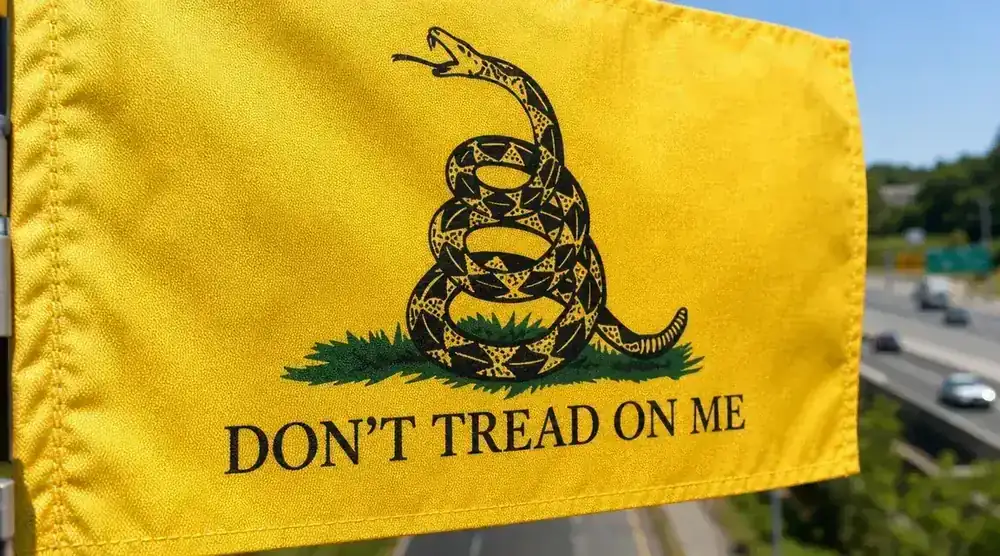
The Anley Gadsden is a 100% polyester flag with a dye-sublimated print, not embroidered. That's the right choice at this price point. Embroidery on a 3x5 flying flag adds weight and can actually create more stress on the header seam when the flag is snapping hard. Anley's polyester weave is tight enough to hold color and loose enough to allow the flag to flow freely without stiffening up in cold weather.
The double stitching runs the entire perimeter. I've looked at it close after a hard run through Wyoming in February when the temperature was single digits and the flag was semi-rigid from the cold. Every stitch was intact. The flyend hem, which is where most flags start to unravel, showed zero separation. That double stitch along the hem is genuinely where Anley earns the price.
The canvas header is two-ply, with the grommets reinforced by a brass ring set inside the canvas. Pull on those grommets hard with both hands and you feel the difference versus the aluminum stamped grommets on cheap flags. The brass doesn't deform under load. I've had this flag off and back on my mount probably forty or fifty times over two years, each time clipping the grommet to a carabiner on my pole. No deformation, no cracking, no rust.
The flyend hem showed zero separation after a February run through Wyoming in single-digit temps. That double stitch is genuinely where Anley earns the price.
Color Fade and Print Quality Over Time
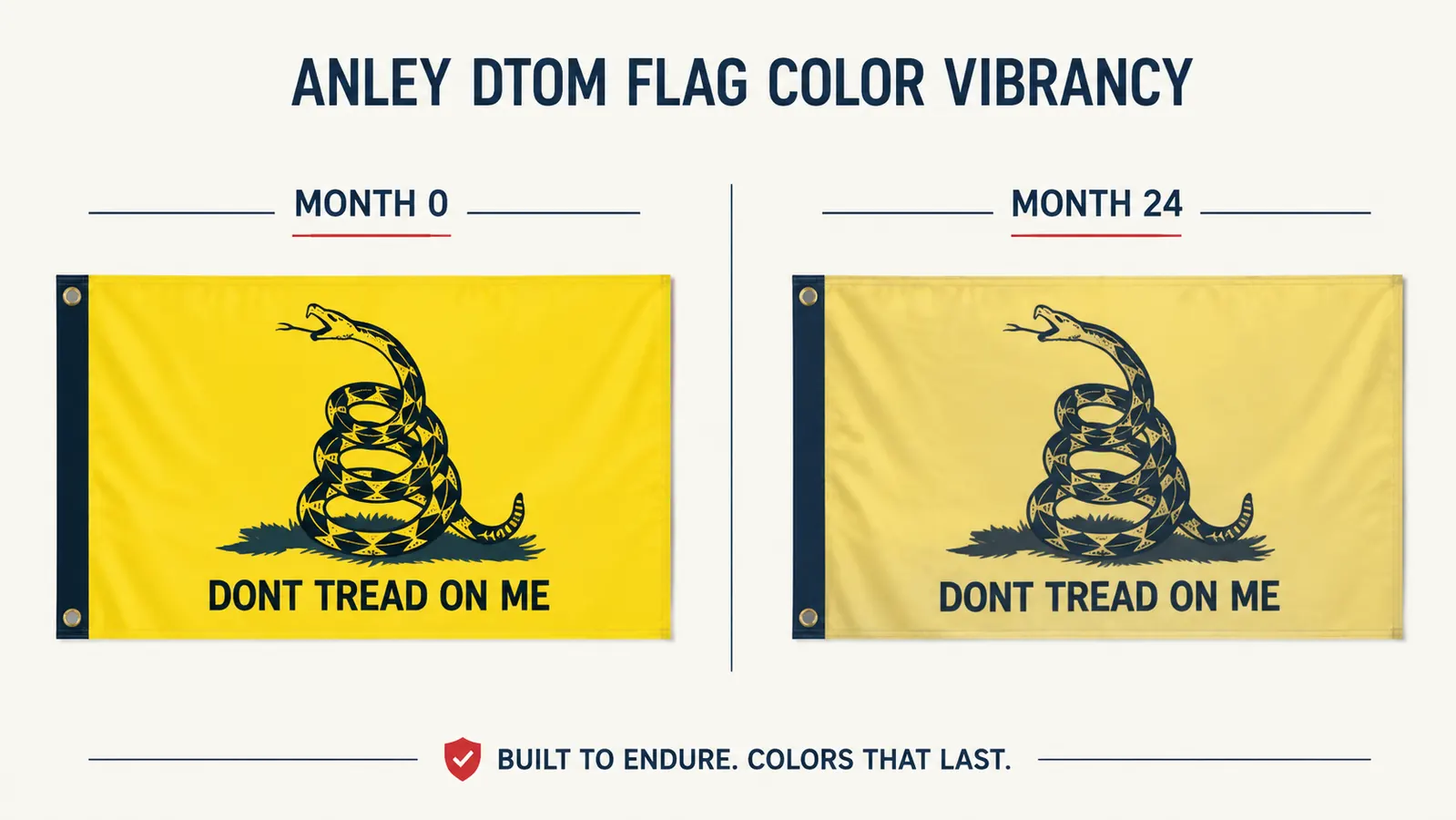
Here's where I'll be straight with you: the yellow does fade. Over 14 months of continuous outdoor exposure, my original Anley Gadsden went from a bright school-bus yellow to something closer to a faded mustard. The black coiled rattlesnake and the 'Don't Tread on Me' text stayed crisp a lot longer than the field color. At the 18-month mark, the snake was still clearly readable from fifty feet. The yellow ground was visibly lighter. By month 22, I replaced it with my backup flag, not because anything was failing structurally, but because I want it to look right rolling down the road.
That fade timeline is actually pretty good for a flag that costs under seven dollars and lives at highway speed outdoors. I've seen thirty-dollar embroidered flags fade worse in twelve months. The UV exposure on an OTR truck is brutal, especially in the southwest. If you're running Texas, Arizona, or New Mexico routes in summer, plan on replacing any flag every twelve to eighteen months regardless of brand. The Anley's advantage is that you can replace it without it hurting.
Performance at Highway Speed
A 3x5 flag on a truck doing 70mph is experiencing serious air load. I've clocked the snap and pop on mine during side-wind conditions on I-80 in Nebraska where you've got a 25mph crosswind on top of 70mph forward speed. The flag is handling a composite load that would destroy a weak hem in days. The Anley held without hesitation. The polyester has enough body to fill out and fly without tangling back on the pole, but enough flexibility to absorb the load without pulling the header.
One thing worth mentioning: in very light wind, 3x5 is a bit large for a standard 5-foot pole. You'll get some droop at low speed. That's a geometry problem, not a flag quality problem. If you want it flying at all speeds including around-town, size down to a 2x3. But for highway display, the 3x5 fills out beautifully and the Gadsden design reads clearly at distance.
I went through a serious rainstorm on I-44 coming out of Oklahoma City in October, full-on downpour for about two hours. The flag got soaked through. I was a little worried because dye-sublimated prints on cheaper flags sometimes run when they get saturated repeatedly. Pulled into a rest stop, the flag dried out over the next few hours in the sun, and the colors were exactly where they'd been before the rain. No bleeding, no strange marks. Anley uses a fade-proof ink process that holds up to moisture.
Who This Flag Is For
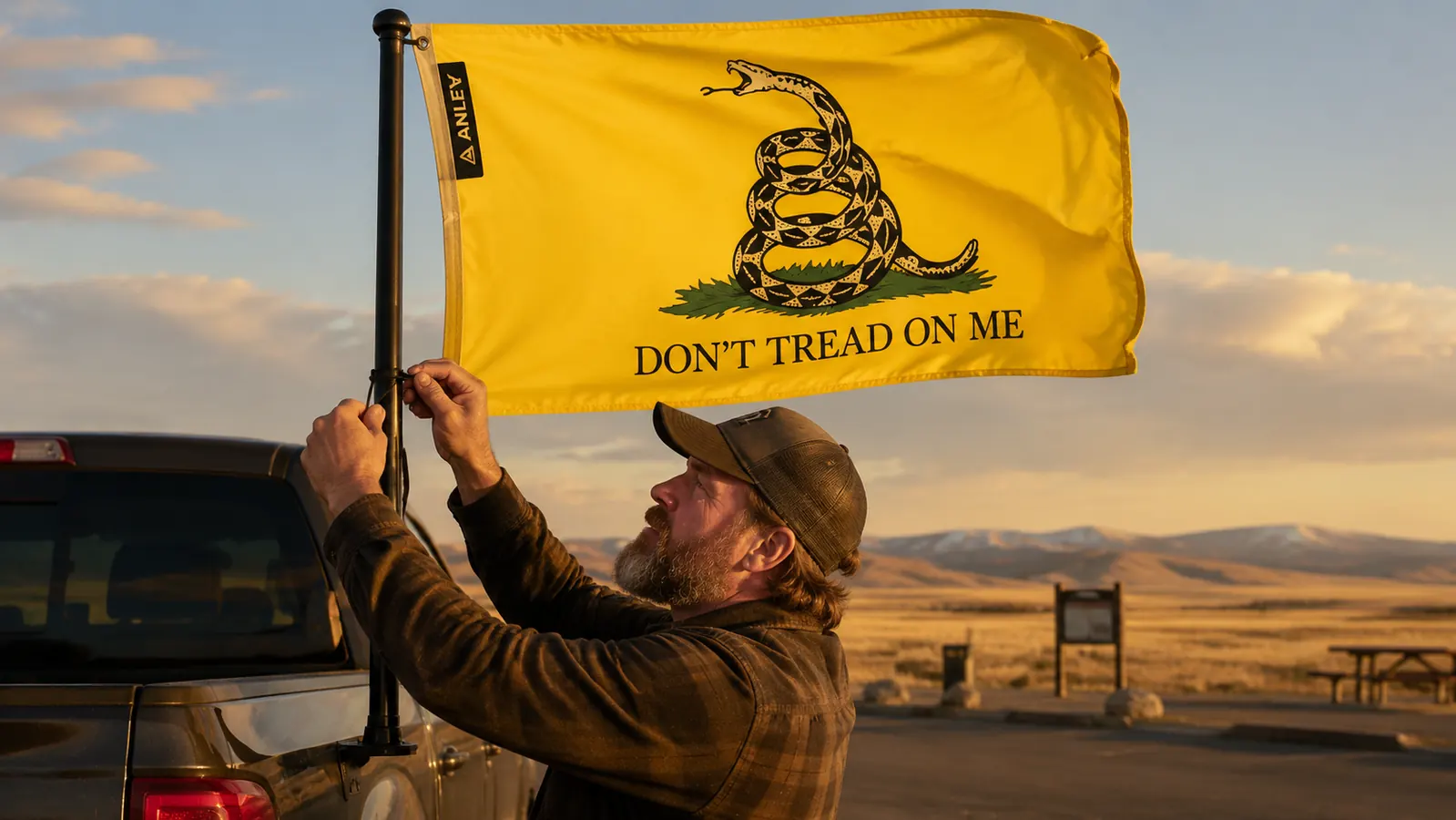
The Anley Gadsden is the right flag if you're an OTR driver or owner-operator who wants to fly the Don't Tread on Me at highway speed without spending a lot or fussing over it. It's for the trucker who replaces flags once a year or so as part of normal rig maintenance, not the guy who expects a single flag to last five years on a moving vehicle. It's also right for anyone who drives heavy routes through weather-variable states, because the construction handles real conditions, not just fair-weather display.
If you're a veteran and you want to fly the Gadsden because it means something to you, not just because it looks good, this flag is built with enough respect for the design that you won't feel like you're compromising. The rattlesnake imagery is sharp and the lettering is clean. It represents correctly.
Who Should Skip It
If you want an embroidered Gadsden that you'll keep on a stationary mount, the Anley printed version probably isn't your flag. Embroidered flags have a different look and a heavier feel that some people prefer for display. The Anley is made for motion, not for a pole in your yard. If permanence and luxury finish matter more than highway performance and price, look at a heavyweight embroidered option.
Also, if you're running extreme UV routes, like Phoenix to Albuquerque every week in July and August, go in knowing you'll replace this one around the 12-month mark. Plan for it and budget for it. At the current price, two replacements per year still costs you less than most single-purchase alternatives.
What I Liked
- Canvas header is thick and properly reinforced, grommets don't deform under repeated load
- Double stitching on the full perimeter holds through highway-speed buffeting and cold weather snap
- Dye-sublimated print doesn't bleed or run after heavy rain
- Vivid yellow and sharp snake detail read clearly from distance at highway speed
- Price point allows for planned annual replacement without budget pain
- 17,000-plus Amazon reviews means you're buying something that's been road-tested by a lot of truckers before you
Where It Falls Short
- Yellow field fades noticeably by month 14-16 of continuous outdoor exposure
- At 3x5, there's some droop at low speeds on a 5-foot pole, not a defect, just physics
- Print-based flag, not embroidered, which some traditionalists prefer for the Gadsden design
Alternatives I Considered
I looked at a couple of embroidered Gadsden flags in the $25-35 range before landing on the Anley. My thinking was that embroidery would outlast the print. What I found is that embroidered flags at that price often have the same canvas header problems as cheap printed flags, and the weight of the embroidery adds stress to the header seam on a moving truck. I tried one on a test run from Memphis to Nashville and the header seam was showing stress at the fold after one long run. Sent it back.
The value equation on the Anley is hard to beat. For the price of one mid-range embroidered flag, you can buy four Anley Gadsdens and rotate them every six months. Your flag always looks fresh and you're always flying something structurally sound. That's the math that made sense to me, and it's held up over two years of running.
Two years, two flags, zero blown grommets. At this price you can afford to replace it when it fades.
The Anley Gadsden is the flag I recommend to any trucker who asks me. Under seven dollars, solid construction, and it represents the Don't Tread on Me design the way it should look rolling down the highway. Check today's price and availability on Amazon.
Amazon Check Today's Price on Amazon →