
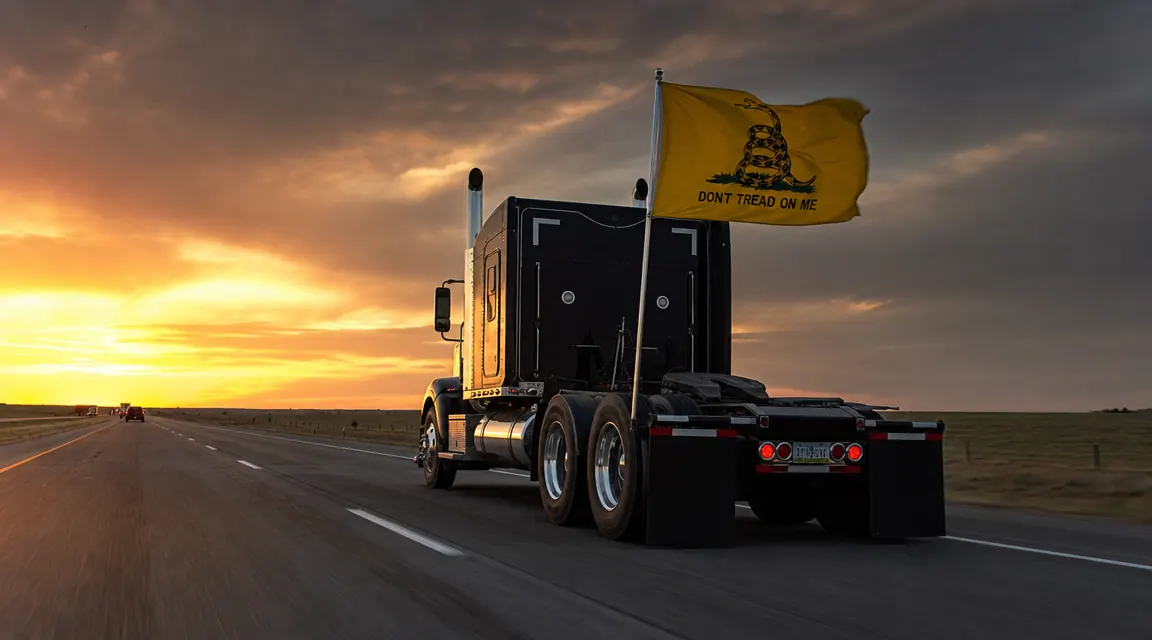
I get asked this question at fuel stops more than I would expect. Some driver sees the bright yellow Gadsden flying off my rig and says something like, 'I bought one of those fancy embroidered ones, cost me three times what yours did, and it did not even make it through summer.' I nod, because I have seen that story play out more times than I can count over thirty years of OTR driving. The assumption is that more money means more durability. On a flag flying off a semi at 70 miles per hour through Oklahoma in August, that assumption does not hold.
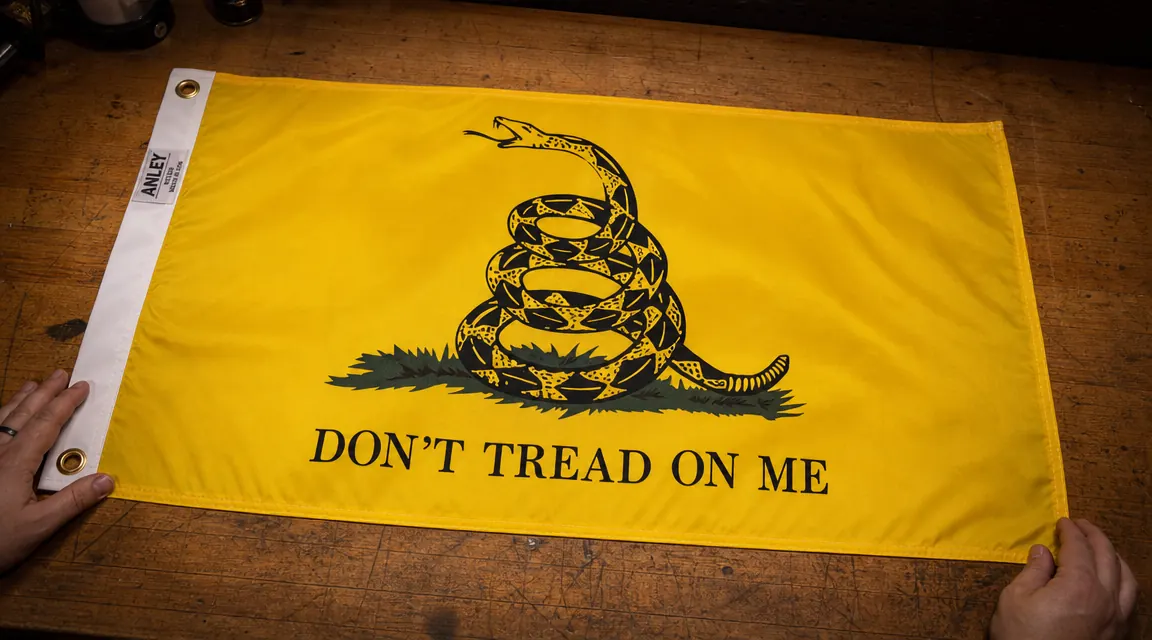
Here is the short answer before I dig into the details: the Anley Fly Breeze Don't Tread on Me flag, at around seven dollars, is the better choice for almost every OTR driver. It is not cheaper because it is a lesser product. It is cheaper because Anley built it for exactly the conditions a truck flag faces every day, and the embroidered alternatives at two or three times the price bring weight and stiffness that actually work against them in highway wind loading.
| attribute | left | right |
| attribute | left | right |
| attribute | left | right |
| attribute | left | right |
| attribute | left | right |
| attribute | left | right |
| attribute | left | right |
| attribute | left | right |
| attribute | left | right |
| attribute | left | right |
Where the Anley Fly Breeze Wins
Flags on semis do not live the same life as flags mounted on a VFW post flagpole. A residential flag might flutter in a ten-mile-per-hour breeze for a few hours on a calm afternoon. My rig rolls at 65 to 70 miles per hour for 10 to 11 hours at a stretch, six days a week. Wind loading at that speed is constant and significant. The physics of flag durability under those conditions heavily favor a flag that can flutter freely over one that is stiff. Embroidered thread adds weight and creates micro-rigidity across the fabric face, right where you want flexibility and free movement. The Anley's lightweight polyester breathes, ripples, and moves the way a flag is supposed to at speed. That reduces stress at the header and at the fly edge, which is where every flag eventually fails.
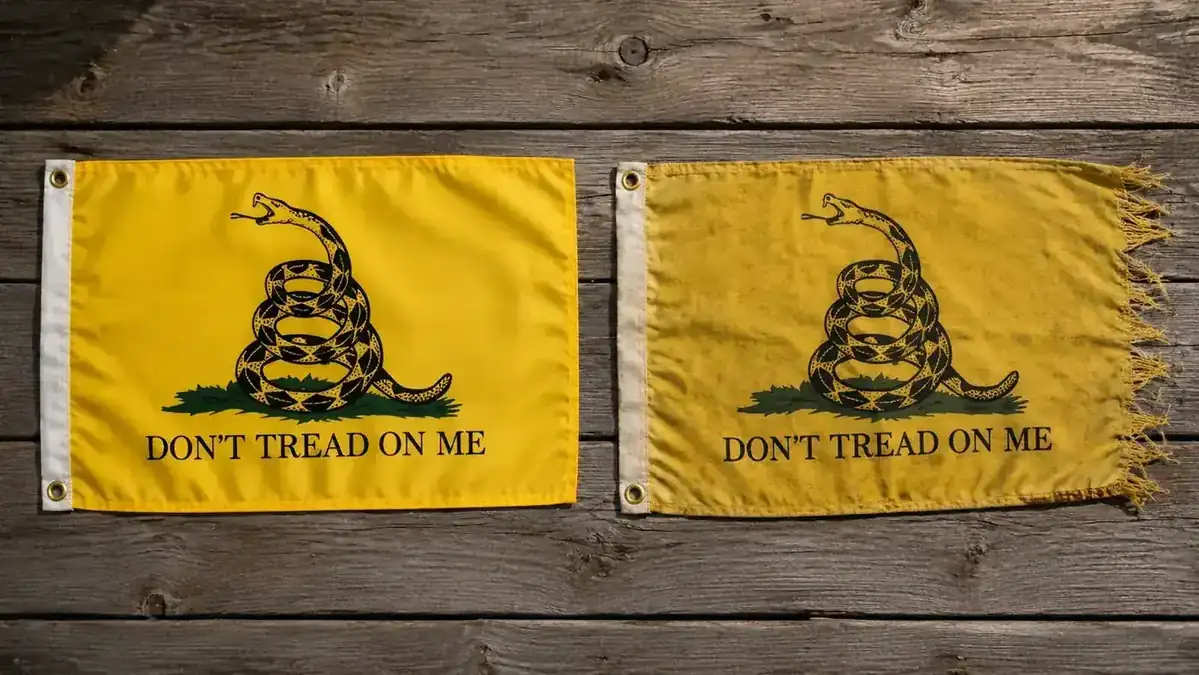
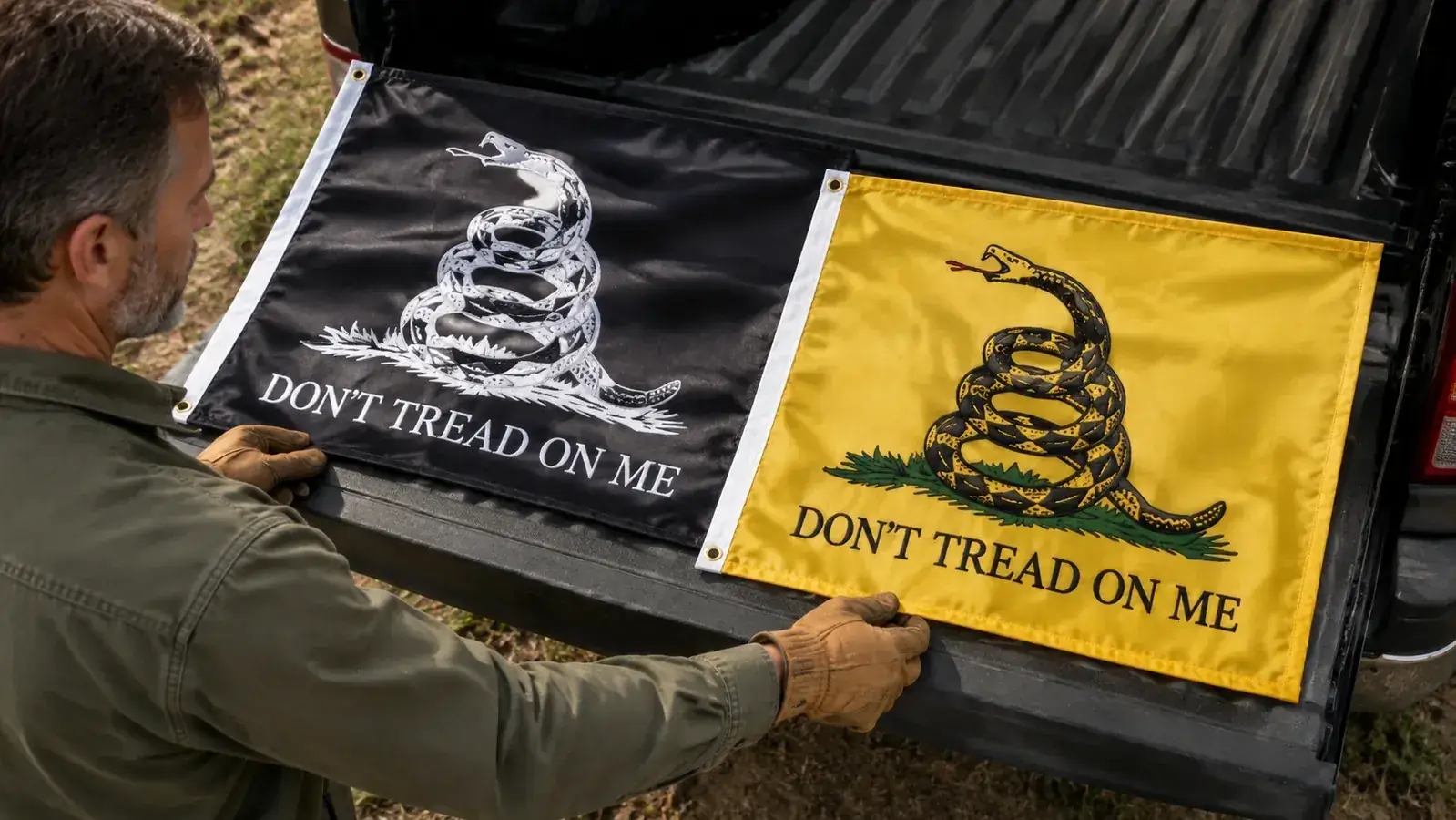
The dye-sublimation printing also holds color better than people expect from a printed flag. The dye goes into the polyester fiber rather than sitting on top of it. After two years on my Peterbilt, including two full summers running I-20 and I-40 through the Southwest, the coiled rattlesnake and the yellow field color are still sharp and readable from fifty feet at a truck stop. I have seen embroidered versions where the yellow base fabric had gone from mustard-bright to pale straw within one season, while the darker thread stitching still looked okay, leaving the snake looking like it was floating on a bleached-out background. That is not what the Gadsden is supposed to look like.
The 17,168 Amazon reviews at 4.7 stars are not an accident. When this many buyers leave that high a rating on a product, you are looking at a flag that consistently delivers what it promises. I read through the trucker-specific reviews when I was deciding, and the pattern held: people mentioned specifically that it lasted through a full OTR season, that the colors held, and that the stitching on the edges did not start pulling apart the way cheaper flags do. That is exactly what I have experienced on my own rig.
Where the Embroidered Gadsden Wins
I am not going to pretend the embroidered flag brings nothing to the table. If you are flying a Gadsden from a fixed flagpole at your home or shop, mounting it indoors on a wall display, or using it for a ceremonial or event context, the embroidered version carries more presence. The texture is different in a way that prints cannot replicate. You can feel the snake scales raised slightly off the fabric surface. For display purposes where the flag is not getting shredded by constant highway wind, embroidery is a legitimate and meaningful choice, and plenty of people value it for those reasons.
There are also embroidered Gadsdens at the higher end of the price range, around $40 to $55, built from heavier nylon with properly reinforced lock-stitch terminations at every embroidery edge. Those are engineered better and will outperform the mid-range embroidered options. But the comparison I am drawing here is between the Anley and the typical $18 to $25 embroidered option that most people land on when they search for a Gadsden flag on Amazon and see something more expensive and assume that means more durable. At that price point, the build quality does not justify what you are paying if the flag is going on a moving vehicle.
17,168 truckers have already tested this. The Anley DTOM still looks sharp after two Texas summers.
Double-stitched edges, canvas header, brass grommets, UV-treated dye that holds color through a full OTR season. The Anley Fly Breeze Don't Tread on Me is the practical call for drivers who want the Gadsden flying off their rig without replacing it every few months.
Amazon Check Today's Price on Amazon →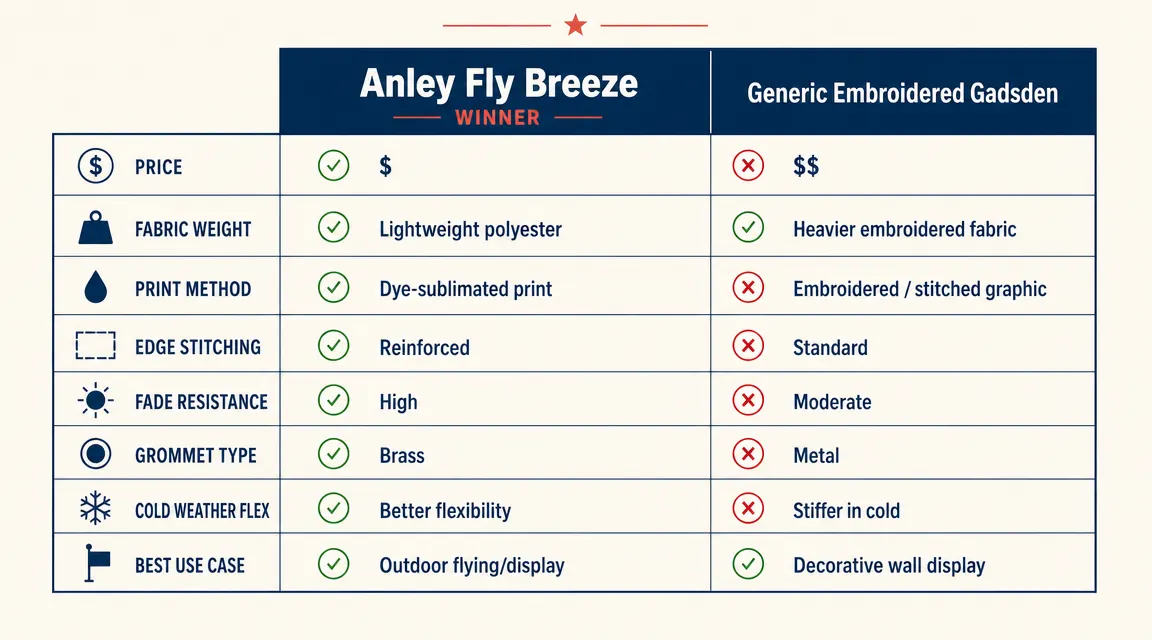
The Real Failure Mode: Where Embroidered Flags Come Apart on a Truck
Here is the mechanical problem that embroidered flag sellers do not put on their listing pages. When you stitch thread into fabric and then subject that fabric to constant high-frequency flutter, you create stress concentration points at every place the embroidery pattern terminates. That is the end of a snake scale outline, the tip of the coil, the tail of the rattlesnake. Every one of those termination points is a spot where the thread is anchored to the base fabric with a knotted or locked stitch, and every one of those anchors creates a tiny hard spot surrounded by fabric that wants to flex. Over thousands of miles of highway flutter, those hard spots act like perforations. The thread begins to lift, and once it starts, it does not stop. You end up with a flag that looks like it has the measles, with little loops and whiskers of thread sticking up all over the snake.
The Anley does not have this failure mode. The entire flag face is a single printed polyester substrate with no thread termination points outside the perimeter stitching. There is nothing to pull loose across the image area. The only structural stitching is the double-stitch around the edges and the canvas header attachment, both of which are engineered for load-bearing use rather than decorative embroidery. That distinction is the whole ballgame when you are putting 600 miles on your rig in a single run.
After thirty years of flying flags off big rigs, I can tell you straight: embroidery is beautiful in a display case. On the back of a Freightliner doing 70mph through a headwind outside Amarillo, it is a liability.
Cold Weather Behavior on Northern Routes
If you run northern corridors in winter, I-90 through South Dakota, I-80 through Wyoming, anything through Minnesota and the Dakotas from October through March, flag material behavior in cold temperatures is a real consideration most buyers ignore. Embroidered flags stiffen significantly in sub-freezing conditions. The heavier woven base fabric gets rigid, and the embroidery thread and the base fabric have different thermal expansion coefficients. When the flag snaps hard in a wind gust at 20 degrees Fahrenheit after being stiff for hours, you can get stress cracking at seam lines where embroidery meets unembroidered fabric. I have pulled an embroidered flag off a mount in January outside of Fargo and found a crack running clean through the body of the snake where the embroidery border met the base field. The flag looked fine from a distance. Up close it was finished.
The Anley polyester stays flexible at sub-freezing temperatures. It flutters instead of snapping rigid, which is what you want in cold brittle conditions. The canvas header also stays pliable in cold better than many synthetic alternatives, which matters because the header is where grommet loads are concentrated. A pliable header distributes that load without concentrating stress at the grommet edges. Small detail, meaningful difference over a full winter season on a northern corridor.
Who Should Buy Which
Buy the Anley Fly Breeze Don't Tread on Me if you are an OTR driver, a regional driver running your rig more than three days a week, or anyone mounting a flag on a vehicle. It handles wind loading, UV exposure, cold weather flex, and constant vibration better than embroidered alternatives at its price point. You could replace the Anley three times a year and still spend less than one generic embroidered Gadsden. In practice you will not need to replace it three times, because it holds up well. But the economics are not close.
Buy an embroidered Gadsden if you are flying it from a fixed residential flagpole in a moderate climate, displaying it indoors, using it for ceremonial purposes, or if you specifically want the raised-thread texture for personal reasons. For a static display context, embroidery is a legitimate and good-looking choice. For anything on a moving vehicle, put your money on the Anley and use what you save on something else for your rig.
If you want to go deeper on the Anley's season-by-season performance, I covered all of that in my long-term review where I tracked the flag through two full years on the road. And if you are still working out which Gadsden construction and size makes sense for your specific truck setup and mounting hardware, the buying guide walks through every material, size, and mounting variable worth knowing. Links for both are below.
The Don't Tread on Me flag has carried real meaning for veterans and working people in this country for over 250 years. It belongs on a rig that rolls every week, not packed away because the last one shredded before Thanksgiving. The Anley keeps it flying. That matters to me personally as a Marine Corps vet who spent three decades on the road, and I am confident it matters to you too if you have read this far.
Over 17,000 buyers and two years on my own Peterbilt. The Anley DTOM is the flag I recommend for truckers.
Check the current price on Amazon and see if it is still under ten dollars. It usually is, and the gap between what this flag costs and what it delivers is the whole reason it is my recommendation over anything embroidered in its price range.
Amazon Check Today's Price on Amazon →