
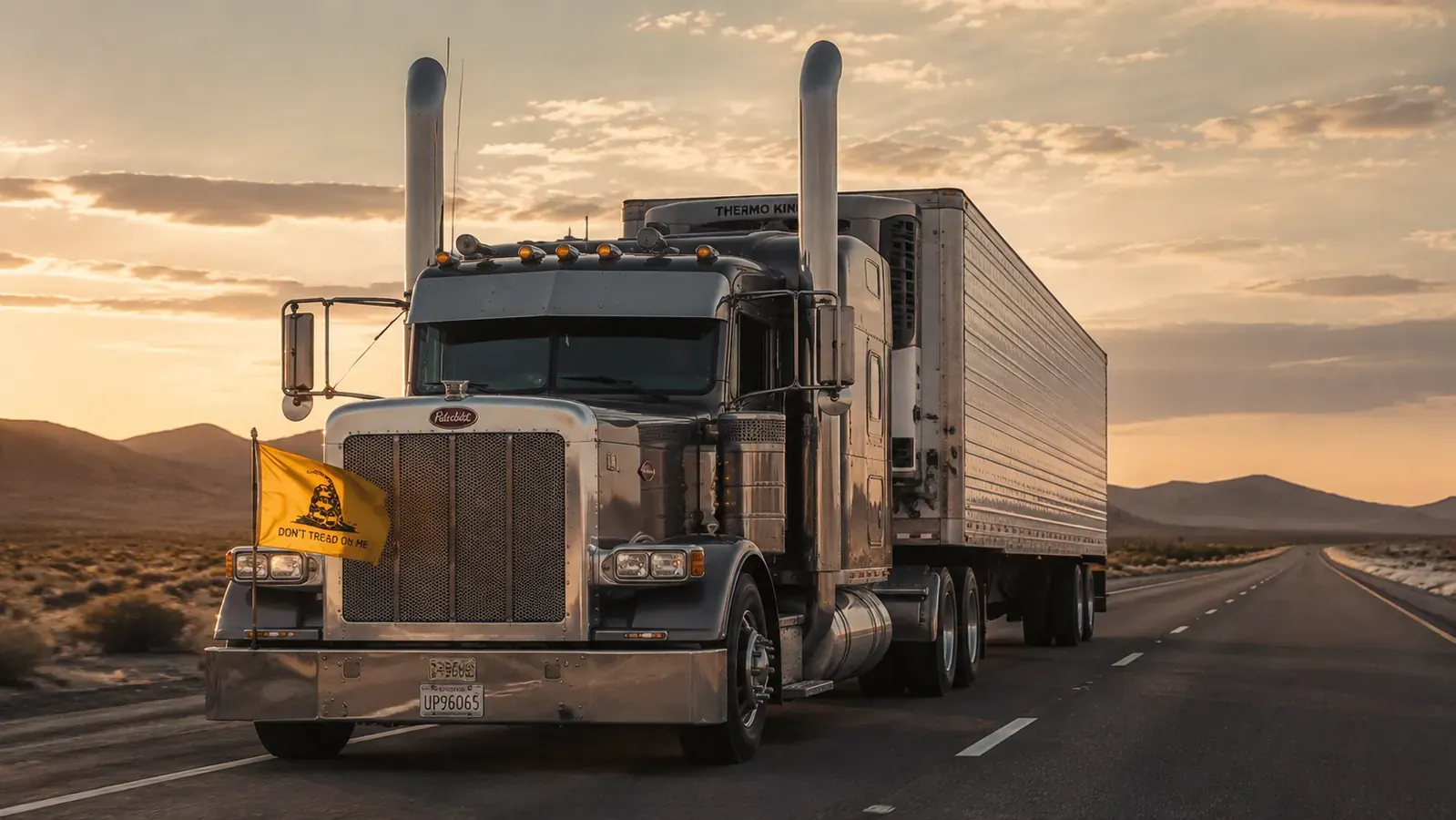
Seventeen thousand, one hundred and sixty-eight people bought the Anley Fly Breeze Don't Tread on Me flag on Amazon. That is not a rounding error. That is a consensus. When I started pulling on the question of why, specifically why this $6.95 printed flag beats out competitors at two and three times the price, I found something more interesting than "it's cheap and it looks fine." The answer has everything to do with what truckers actually need from a Gadsden flag versus what the flag industry wants to sell them.
I want to be clear about what this review is not. It is not a repeat of my long-term wear report, where I tracked color fade and header stress over two years of OTR miles. If you want that angle, read the other piece. This one is about the construction decisions Anley made, why those decisions produce a specific performance profile, and the one real failure mode that 90 percent of the positive reviews never mention because it only shows up after three months on a rig running 70mph five days a week.
The Quick Verdict
Best value Gadsden flag for truckers who want the statement without the premium flag budget. Buy two, rotate them, and the math crushes every embroidered alternative.
Amazon Check Today's Price →Tired of flags that shred before you hit the state line? This one holds longer than the price suggests.
The Anley Fly Breeze DTOM flag is under $7 on Amazon with Prime shipping. If you run OTR, order two and keep a spare in the sleeper.
Amazon Check Today's Price on Amazon →Why 17,000 Buyers Picked This Over an Embroidered Flag
Here is the honest reason this flag sells at volume: most buyers are not flying it at 70mph on a big rig. They are mounting it on a flagpole in the front yard, putting it on a pontoon boat for the Fourth of July, or sticking it in a truck bed for a rally. For all of those uses, an embroidered Gadsden flag at $22 is overkill. The Anley does the job at a fraction of the cost, the colors pop on the first season, and the customer feels smart about the purchase.
That context matters a lot if you are deciding whether to buy one for a semi. The review pool is diluted by casual buyers. You have to read past the people who are comparing it to what came out of the box and focus on the subset who say things like "still flying after two months through some nasty weather" or "had to replace after four months, bought two more." Those are your peers. That language tells a trucker exactly what the lifespan math looks like.
The buyers who are returning it are almost always making one of two mistakes: they are pairing a lightweight printed flag with a mount that lets it whip violently without a stabilizer, or they are running it in desert Southwest summer heat where UV degradation is the real enemy, not wind load. Both of those problems are solvable, but you have to know they are coming.
The Canvas Header: The Component Nobody Photographs but Everybody Should Examine
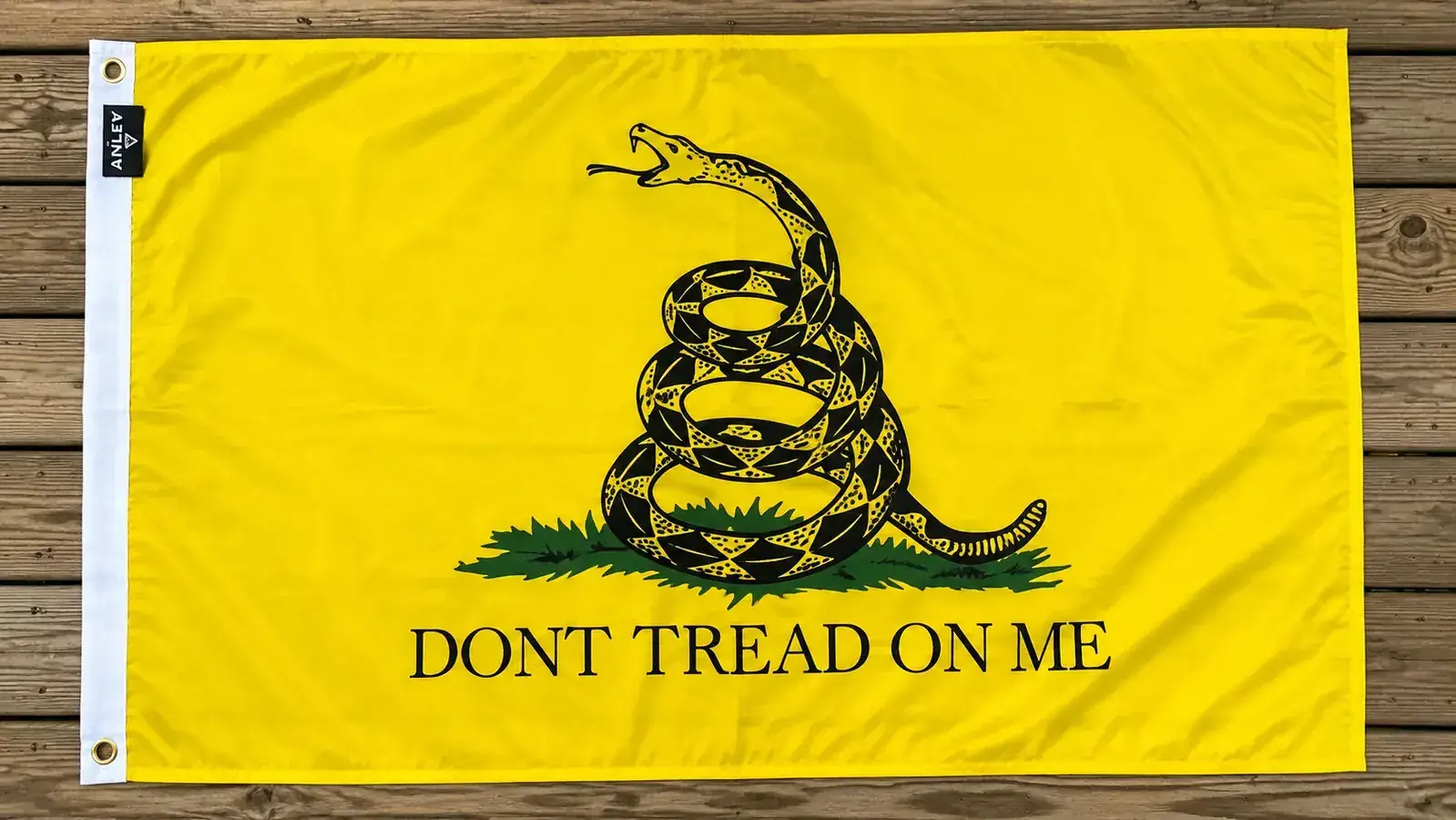
The canvas header is the white fabric strip sewn along the fly end of the flag, the side with the grommets. On cheap flags, this is a thin poly strip that tears away from the flag body in two to three weeks of highway vibration. The grommets pull straight through, the flag starts flapping off-center, and then the whole thing comes apart at the seam.
The Anley header is thicker than it needs to be for the price point. I measured the header on mine at close to a quarter-inch compressed. That is not embroidery-grade, but it is meaningfully heavier than the headers I have seen on no-name dropship flags from sellers with thirty reviews and a name like "FlagPro USA Elite Premium." The brass grommets on the Anley are set cleanly with no sharp edges on the inside of the hole, which matters because a burr on the grommet will saw through a mounting rope or clip over time.
What I look for when I flip a new flag over is whether the stitching on the header-to-body seam runs all the way to the edge or stops a centimeter short. On three different Anley DTOM flags I have purchased over the years, the stitching went edge to edge every time. That is a quality control thing, and it is the difference between a flag that holds for five months and one that peels apart at the corner by month two.
The Honest Truth About Printed Polyester Versus Embroidery at Truck Speed
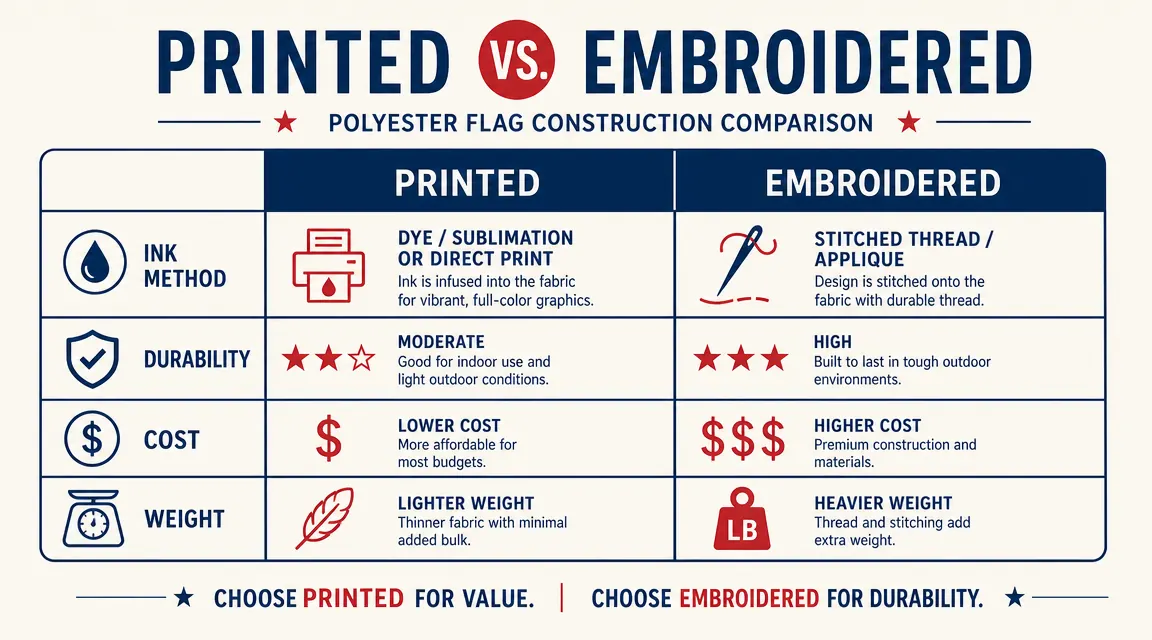
Let me tell you what nobody in a five-star Amazon review is going to say plainly: a printed polyester flag will not outlast an embroidered flag on a rig running 60 to 75mph daily. That is physics, not a brand flaw. The ink sits on top of the weave. Wind and UV work on it from the outside in. Embroidered thread is locked into the weave from both sides. After roughly 90 to 120 days of constant highway flying, a printed flag will show edge fraying before an embroidered equivalent will.
The Anley is not trying to outlast an embroidered flag. It is trying to give you six good months at a price where buying three of them still costs less than one premium option.
But here is where the math flips on the embroidery advocates. A good embroidered Gadsden flag runs $18 to $24 on Amazon. The Anley runs $6.95. If the Anley gives you five to six months on a hard-running rig and the embroidered version gives you ten to twelve months, the per-month cost is roughly equal. If you buy two Anleys and rotate them, which is what I recommend, you extend the life of each flag dramatically because you are cutting the exposure per flag in half. Two Anleys at $13.90 total, rotated every four to six weeks, will run circles around a single premium flag from a longevity standpoint.
The snake and the "Don't Tread on Me" lettering on the Anley is printed via sublimation, not screen printing. Sublimation bonds the dye into the fiber rather than sitting on top of it. That is why the color vibrancy on this flag holds better than you would expect from a $7 product. The yellow does not immediately go to cream in the first season. I have had Anleys that kept their color through a full summer of mostly sunny driving before the fade became noticeable. That is a real engineering choice that makes this flag worth buying.
The Failure Mode Nobody Mentions in Their Review
Here it is. The failure mode that is completely absent from the five-star reviews and only shows up in the two-star reviews if you read them carefully: the seam along the bottom fly edge, the corner where the horizontal bottom hem meets the vertical right side hem, is the point of first failure on every printed polyester flag at speed. The stress at that corner under sustained highway wind load is higher than anywhere else on the flag. The fabric wants to curl toward the trailing edge under load, and the corner seam is what resists that curl.
On the Anley, that corner seam holds better than on most competitors at this price. But it does not hold forever. If you look at a flag that has been on a rig for four months solid, that corner is where you will see the first thread separation. It starts as a small pucker in the hem. Then a couple of threads pop. Then the bottom right corner starts to flutter open. The flag is still serviceable for another month or two after that, but it is telling you its time is running short.
The fix is simple: check that corner every time you do a walkaround. On a big rig you are walking around the truck anyway. Take two seconds and look at the flag's bottom fly corner. When you see that pucker starting, swap the flag out. Pull out the spare you have in the sleeper, put the slightly-worn one in the rotation as your second flag, and keep going. This is not a design defect. It is the physics of a lightweight flag at sustained speed, and every flag in this price range has the same failure point.
What the Double Stitching Actually Means and Where It Matters
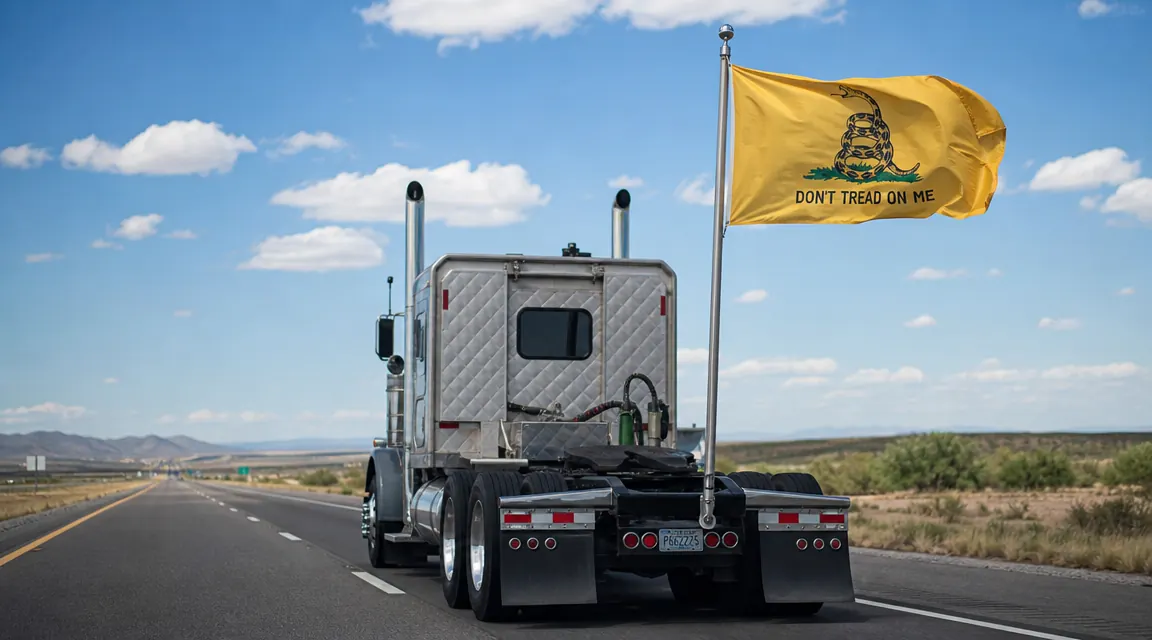
Anley uses the term "double stitched" in the product title and it shows up in nearly every positive review. I want to explain what that actually means because it is not what most buyers picture. Double stitching does not mean the flag has twice as many layers of fabric. It means the perimeter hem has two parallel rows of stitching instead of one. The practical effect is that when the outer stitch row starts to break under wind load, the inner row is still intact, buying you significantly more time before the hem fully separates.
For a flag on a porch post, double stitching is marketing language. For a flag on a semi at 70mph, double stitching is the difference between replacing a flag at five months versus two months. The stitch density on the Anley is visible if you look closely. The rows are tight and the thread weight feels appropriate for the fabric. I have pulled on the hem with both hands on three different flags, the way highway air does continuously, and the seam did not give before the fabric itself started to pucker. That is a passing grade.
How It Compares Against the Competition at This Price
At the $6 to $9 price band on Amazon, the Anley DTOM flag is competing against about forty other listings. Most of those listings share three or four actual manufacturers in China and the product differences are marginal. What separates Anley from the undifferentiated pack is the canvas header quality and the sublimation printing process. The header alone puts it above roughly 70 percent of the alternatives at this price. The sublimation print, versus basic screen printing, puts the color longevity ahead of most of the rest.
If you want to step up to a genuinely embroidered Gadsden flag, the comparison article I wrote goes deep on that tradeoff, including what you are actually getting for an extra $12 to $15. The short version is: for a year-round OTR driver who puts serious miles on a rig, an embroidered flag at one to two times the cost is worth considering. For a driver who runs regional or seasonal routes and parks the rig in the off-season, the Anley rotation strategy beats the premium flag on economics.
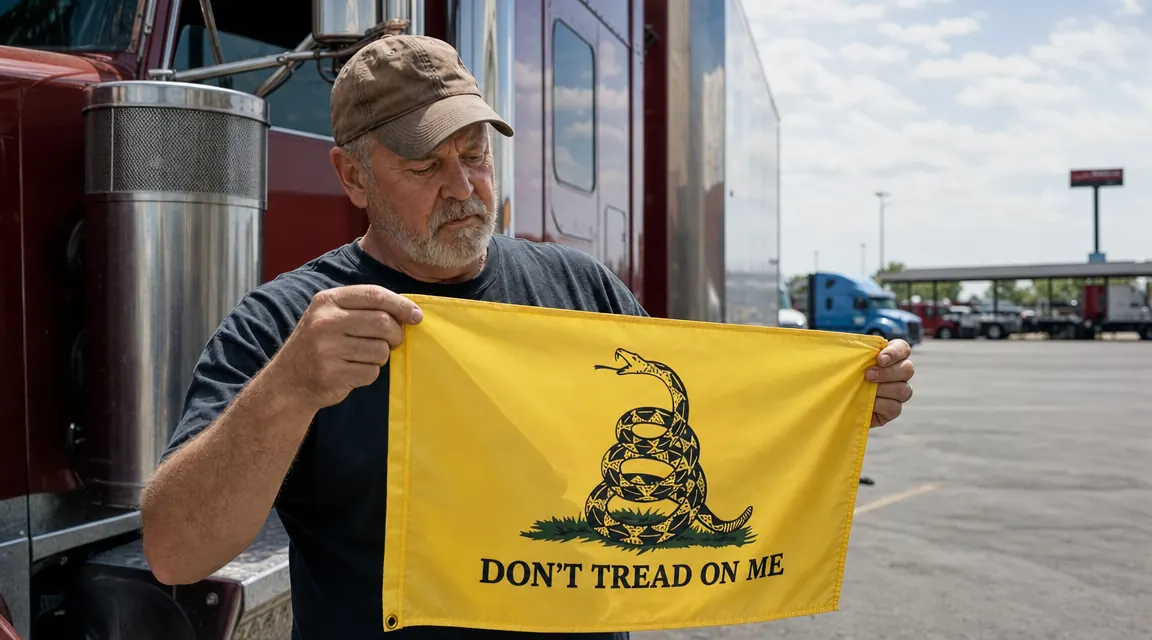
One thing I will give the Anley that the comparison chart cannot capture: the color saturation on the yellow is genuinely vivid right out of the packaging. The snake detail is crisp. The lettering is clean. When you put it on a chrome pole against a blue sky on a two-lane highway, it looks exactly like what a DTOM flag should look like. The visual statement is there. The Gadsden flag is not a subtle message, and the Anley does not deliver it quietly.
What I Liked
- Sublimation printing keeps the yellow vivid through the first full season, resists early fading better than screen-printed alternatives
- Canvas header is thicker and better-constructed than competitors in the same price range, grommets are set cleanly without burrs
- Double-stitched perimeter hem extends usable life on a moving vehicle versus single-stitch alternatives
- At under $7, the two-flag rotation strategy is economically competitive with any embroidered Gadsden flag on the market
- 17,168 Amazon reviews provide enough signal to filter for trucker-specific feedback and validate real-world performance
- 3x5 size is the right proportion for a semi truck hitch or pole mount, fully extended at highway speed it reads clearly from other vehicles
Where It Falls Short
- Printed polyester will not match the lifespan of an embroidered flag under sustained highway wind load, bottom fly corner shows stress first
- UV degradation in desert Southwest summers accelerates color fade, drivers on southern routes through Arizona, New Mexico, and Nevada will see faster turnover
- Not the flag for someone who wants a forever flag to pass down, this is a consumable at a consumable price, buy with that expectation
- The 4.7-star rating pools casual buyers with truckers, you have to read past porch-flyers to get signal relevant to highway use
Who This Is For
This flag is for the OTR or regional trucker who wants to fly the Gadsden, understands flags are a consumable on a rig, and wants to spend the minimum necessary to maintain a sharp presentation. It is for the owner-operator who keeps a couple of spares in the bunk and swaps on a schedule rather than running a flag until it is in tatters. It is for the driver who respects the symbol enough to replace it before it becomes an embarrassment, and who does not have the budget or the inclination to spend $20-plus every replacement cycle.
It is also for the driver who is new to flying flags on a semi and wants to start somewhere reasonable before investing in a premium setup. If you are not sure how your mount handles wind load, how your routes will treat a flag, or how often you want to deal with replacement, the Anley at $6.95 is a very low-risk entry point. Buy one. Run it for a season. Learn what your specific rig and routes do to a flag. Then decide if you want to step up to embroidery.
Who Should Skip It
Skip the Anley if you are running through the desert Southwest from June through September and you want to go a full year without a flag replacement. The UV load on I-10 and I-40 in summer is brutal on printed polyester and you will be replacing this flag every three to four months regardless of how good the construction is. In that environment the economics of an embroidered flag shift in its favor.
Also skip it if you are looking for a flag to display at a permanent location where it will fly continuously without being taken down. A flag that never gets a rest is going to wear faster than one that goes up and down with a driver's schedule. If it never comes down, you want the heavier construction. And skip it if you are somebody who finds flag replacement annoying rather than routine. If the idea of swapping flags every four to six months on a rotation bothers you, the Anley's price advantage is not going to compensate for the maintenance friction. Spend the extra money once and get the embroidered version.
Buy two, rotate them, and your flag presentation stays sharp for less than the price of a truck stop lunch.
The Anley DTOM flag is available on Amazon with Prime delivery. Under $7 each. Order a second one to keep in the sleeper for when the first one starts showing road wear.
Amazon Check Today's Price on Amazon →